


Why GRUNT Ratchet Straps meet AS/NZS 4380 Standards and what It means for you
When you’re securing a load, guesswork isn’t good enough. Whether it’s tools on a trailer or gear in the back of a ute, you need confidence that everything will stay exactly where it should.
That’s where AS/NZS 4380 comes in.
What is AS/NZS 4380?
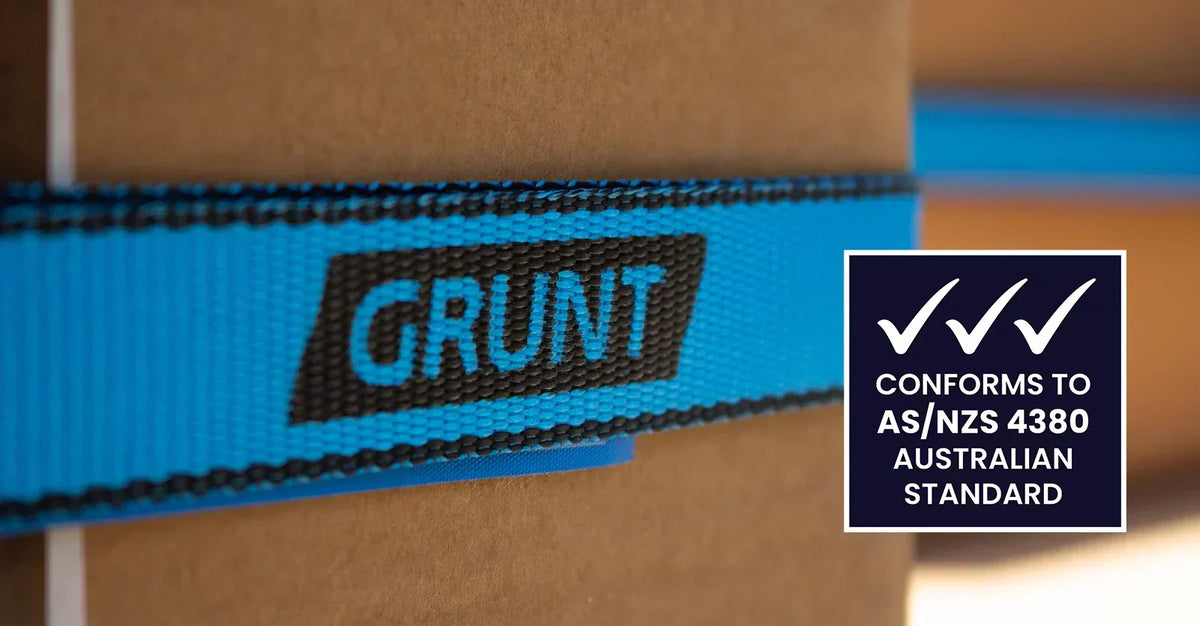
AS/NZS 4380 is the Australian and New Zealand Standard for cargo restraint webbing assemblies. In simple terms, it sets the benchmark for ratchet straps used in transport, helping ensure they are properly rated, identifiable, and suitable for securing loads on the road.
Not all straps are built for this. Some are fine for bundling or light use, but when it comes to load restraint, using a rated, compliant strap matters.
Why it matters
Clear load ratings
Straps that meet the standard display a Lashing Capacity (LC), and that number matters more than anything else on the strap.
It tells you the maximum load the strap is designed to restrain in a straight tie-down, giving you a clear reference point before you even start the job.
It also helps you align with load restraint guidelines, which are based on specific forces during transport like braking, cornering, and acceleration.
Because when it comes to securing a load, knowing is everything.

Built for real conditions
These straps are designed for load restraint, not just general use. That means they’re intended to perform under the forces experienced during braking, cornering, and movement.
Supports safer load restraint
Australian guidelines require loads to be restrained so they don’t shift, tip, or become dislodged during transport. Using a properly rated strap is a key part of getting this right. It gives you a known level of restraint, helping ensure your setup can handle real-world movement on the road.
When combined with correct tensioning, suitable anchor points, and regular checks during the trip, rated straps form a reliable system that helps keep your load secure from start to finish.

What it means for you
Using ratchet straps that meet AS/NZS 4380 gives you:
- Confidence in your gear – you know what you’re working with
- Better decision-making – clear ratings help match the strap to the job
- More reliable restraint – designed for transport, not just convenience
It’s not just about compliance, it’s about control. Less movement, less risk, and a more secure load from start to finish.
Where to look
If you want to know what you’re working with, don’t guess, check the tag.
A compliant ratchet strap will have a blue identification label stitched into the webbing. This is your quick reference point and tells you exactly what the strap is rated for. While the tag can also be produced in other variations, blue is simply an industry-recognised visual cue in Australia, hence why this colour is most commonly used.
On that tag, you’ll find:
- Lashing Capacity (LC) – what the strap is designed to handle
- Manufacturer or supplier identification (Item Code, eg. GRTD0127)
- Standard reference (AS/NZS 4380)
- Other key details like length, material, and construction

No tag, no clarity.
It’s a small detail, but it’s one of the easiest ways to make sure you’re using the right gear for the job.
Don't Forget
Even with compliant straps, proper use still matters. Correct tension, good anchor points, and checking your load during the trip all play a part.
But starting with the right gear makes all the difference.
Check out our guide on the correct method of using a Ratchet Strap here for more info
Read more

GRUNT AUTO-RETRACTA - the easiest Tie-Down you'll ever use. The Patented GRUNT AUTO-RETRACTA holds tension on the webbing like a car seat belt. Making it quick and easy to secure your load...

It’s a common frustration. You’ve got the load ready, the strap in hand, and the S-hook won’t fit your anchor point. Whether it’s a thick trailer rail, oversized tie-down bar, or awkward mounting p...