


Why Lashing Angle Matters When Using Tie-Downs
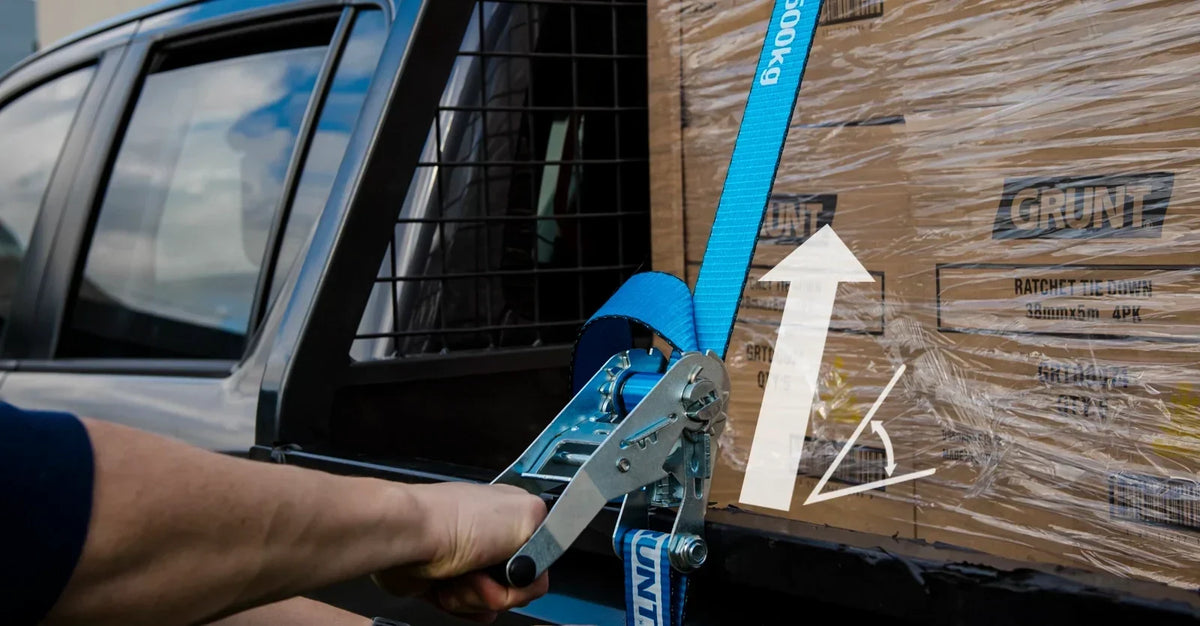
When securing a load with tie-down straps, the position of the strap can have a big impact on how effectively it holds the load. One of the key things to consider is lashing angle.
What is lashing angle?
Lashing angle is the angle between the tie-down and the vehicle's loading deck.For tie-down restraint, the general rule is simple:
The higher the lashing angle, the greater the clamping force.
As the angle decreases, the downward force applied to the load also decreases.
Why does lashing angle matter?
A tie-down creates downward force on the load, increasing the friction between the load and the loading deck. This helps prevent the load from sliding or moving.
The lashing angle affects how much of the strap's tension is converted into this downward force.
For example:
Lashing Angle Guide

So, a tie-down at 30° provides approximately half the angle effect of one at 90°.
This is why positioning your tie-downs correctly matters.
What is the ideal lashing angle?
For tie-down restraint, a higher angle is generally more effective.
The angle should be considered alongside the load weight, lashing capacity, pre-tension and friction when determining the restraint required.
The position of your anchor points and the size of the load will affect the angle.
Where practical:
- Position anchor points so the tie-down creates a steeper angle.
- Keep the strap securely positioned over the load.
- Avoid unnecessarily shallow angles.
- Check the angle after the strap has been tensioned.
Remember, a higher angle doesn't automatically mean your load is properly restrained. The correct number and type of tie-downs depends on the load and the restraint system being used.
How do I measure lashing angle?
Lashing angle is measured between the tie-down and the loading deck. You can use a smartphone angle app, digital angle finder, spirit level with an angle indicator or a lashing-angle gauge.
Once you've measured the angle, refer to the relevant tables in the current Load Restraint Guide to determine the angle effect.
The bottom line
When using tie-down restraint:
Higher angle = greater clamping force.
A flatter angle reduces the downward force of the tie-down, which can reduce its effectiveness.
Getting the angle right is a simple but important part of securing your load.
